
The Short Version
If you’ve lost a gift card, you may be able to recover it if the balance hasn’t been used and you can prove the card belonged to you. For a physical gift card, gather any receipt or other proof of purchase and contact the retailer or issuing brand, who may locate the card number and transfer the unredeemed balance to a replacement. For a digital gift card, search your email, text messages, and apps for the original delivery message. If you can’t find it, contact the issuing company to see if they can resend it—eGifter, for example, lets you resend gift cards you purchased, though not every site offers that.
Jump Ahead!
Click a section to jump to what you need.
Related: Picking the right card in the first place can help you avoid this problem altogether. Check out our guide to How to Choose the Perfect Gift Card, which walks through matching the card to the person and loading it with the right amount.
Lost a Gift Card?
At a birthday party, my younger brother opened a greeting card, smiled when he found a gift card inside, read the handwritten note, and set everything down with the growing pile of wrapping paper and cards. A little while later, someone cleaned up. The gift card disappeared.
A few days later, he remembered the gift card but couldn’t find it anywhere. It probably ended up in the recycling with the wrapping paper, but we’ll never know. What I do know is that this happens far more often than people realize.
Businesses regularly tell us to “treat gift cards like cash,” but what does that actually mean?
Here’s what I think it means.
If that greeting card had contained a crisp $100 bill instead of a gift card, my brother would have put the money in his wallet immediately. He would have protected it and known exactly where he put it. We don’t mess around when it comes to cash because we know that once cash is gone, it’s usually gone for good.
But we aren’t as careful with gift cards.
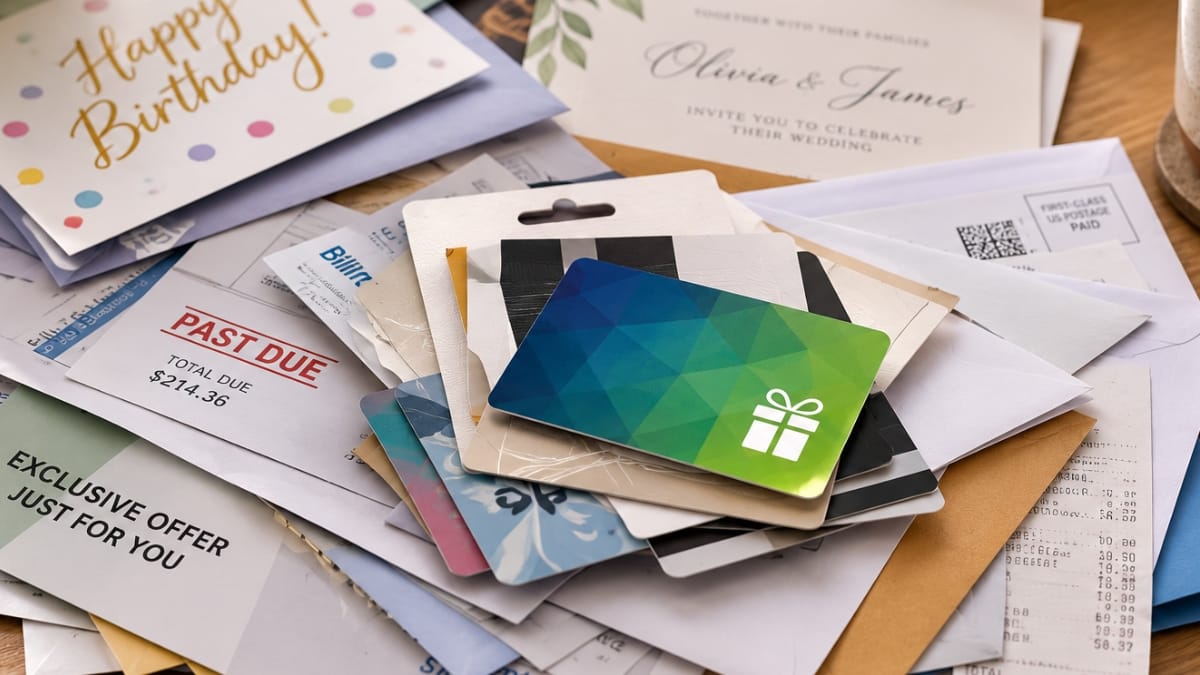
Instead, we leave gift cards tucked inside greeting cards, bury them under a stack of mail, toss them into the glove compartment, or stash them in the proverbial “sock drawer”—all places we’re sure we’ll remember until we don’t.
The good news is that losing a gift card doesn’t always mean the value is gone for good. Whether you misplaced a physical gift card or can’t find a digital gift card, there are steps you can take to potentially recover it.
Physical or Digital? Start Here
The first thing you need to figure out is whether you’re looking for a physical gift card or a digital gift card. That may sound obvious, but the recovery process is completely different depending on the type of gift card you have.
If you lost a physical gift card, start by checking all the usual places—your wallet, car, purse, drawers, pockets, the greeting card it came in, and yes, even the trash or recycling if it recently disappeared. If you’ve already done that, it’s time to shift your focus. Instead of trying to find the plastic card, your goal is to recover the value—which may mean getting a replacement gift card. To do that, you’ll need to identify the missing gift card and show enough information to establish that it belongs to you.
If you lost a digital gift card, you’re also trying to recover the value, but the process is usually much easier. Instead of tracking down a plastic card, you’re retracing the digital trail. Somewhere there’s an email, text message, online account, or purchase record that can help identify the gift card and reconnect you with it.
Let’s walk through the recovery process for both physical and digital gift cards, starting with physical gift cards.
How to Recover a Lost Physical Gift Card
I’ll be honest—recovering a lost physical gift card isn’t easy. Once the plastic card is gone, you may not even know the gift card number you’re trying to replace.
Your job now is to build a paper trail. Every receipt, transaction record, or purchase detail helps customer service identify the missing gift card and determine whether the remaining balance can be recovered.
Here’s where I’d start.
1. Look for the gift receipt
Some gift cards come with a small gift receipt or activation slip. If you still have it, it may include information such as the retailer, purchase date, dollar amount, or even part of the gift card number—all of which can help identify the missing card.
2. Find the original purchase receipt
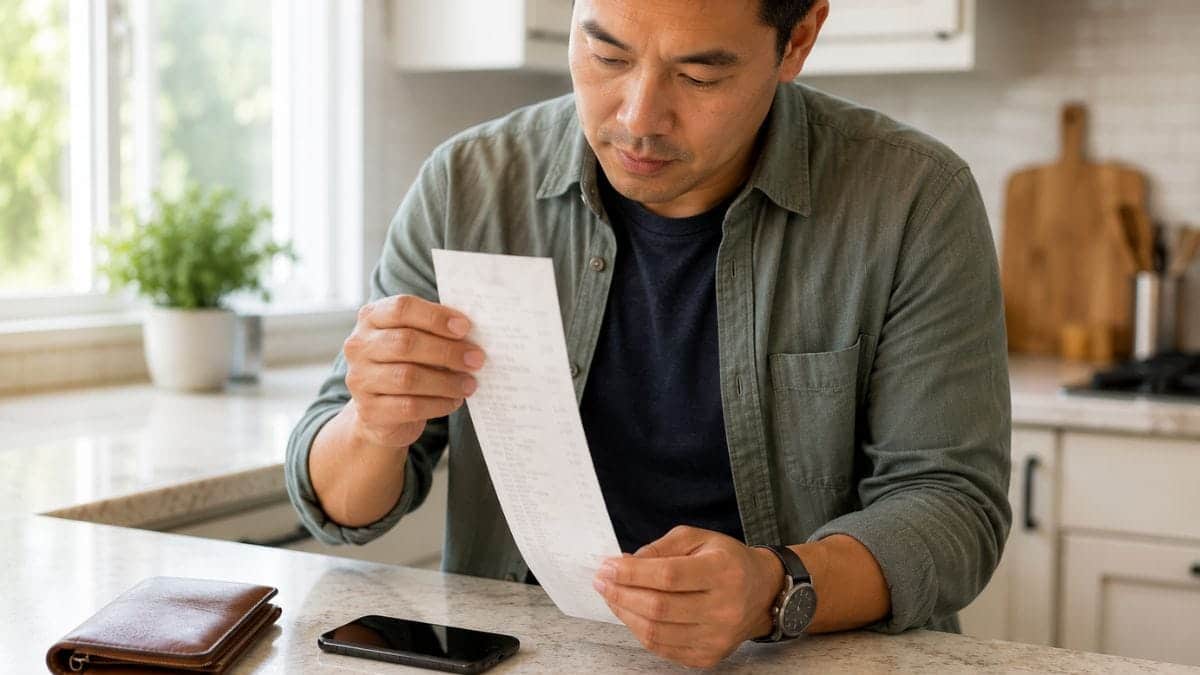
Next, see if you—or the person who gave you the gift card—still has the original purchase receipt. Even if the receipt includes groceries, clothing, or other items, it can still provide valuable information, including the purchase date, location, dollar amount, register number, and sometimes the last few digits of the gift card.
3. Look for other proof of purchase
No receipt? Don’t give up. Think about how the gift card was purchased.
- Was it purchased with a credit or debit card? A bank or credit card statement may help locate the transaction, and some retailers can reprint receipts using the original payment method.
- Was a loyalty account or rewards number used at checkout? Some retailers can look up past purchases through your loyalty account.
- Was the physical gift card ordered online? That’s actually good news. Even though the card itself was physical, an online purchase creates a digital transaction record that can help identify the gift card.
4. Contact customer service
Once you’ve gathered as much information as possible, contact the retailer where the gift card was purchased or the brand that issued it.
Your goal is to give customer service enough information to identify the original gift card and determine whether the remaining balance is still available.
If the gift card hasn’t been redeemed and you can establish ownership, the retailer may be able to transfer the remaining balance to a replacement gift card. Every retailer has its own policies, so there’s no guarantee—but the more information you can provide, the better your chances.
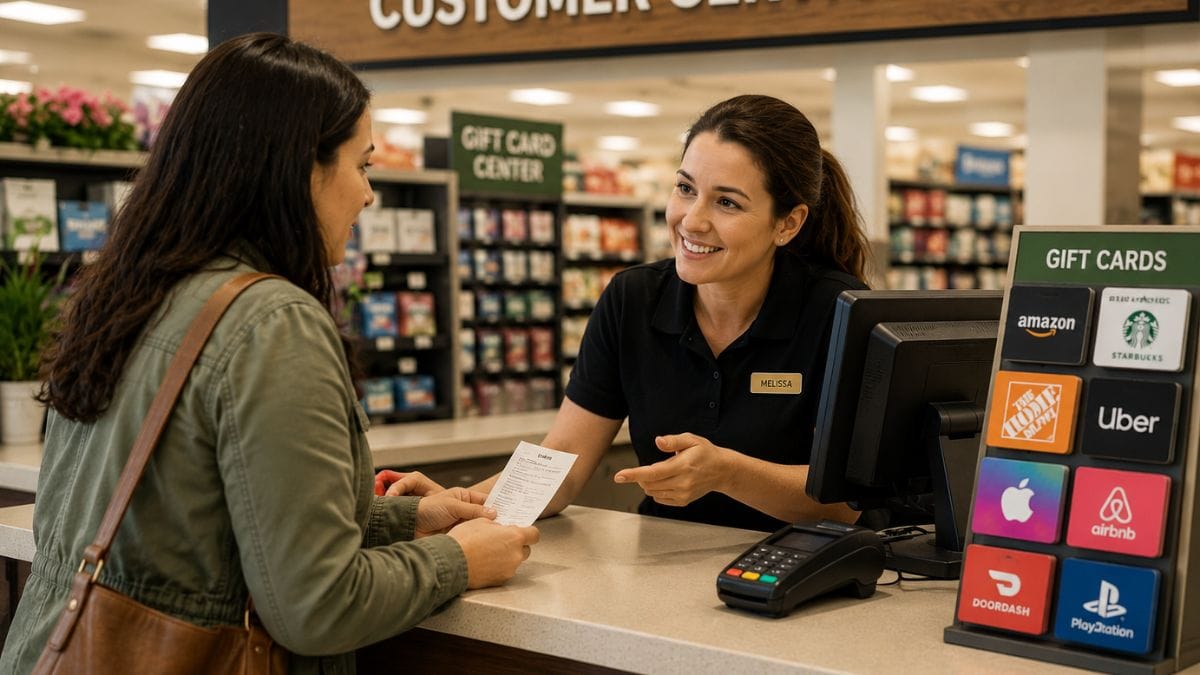
If the Physical Gift Card Was Purchased from Another Retailer
If the gift card wasn’t purchased directly from the business where it can be redeemed—for example, you bought an Amazon gift card at a grocery store or a restaurant gift card at a gas station—the recovery process can be more complicated.
That’s because there are usually multiple companies involved, and each has only part of the information needed to investigate a lost gift card.
- The store that sold the gift card usually has a record that a gift card was purchased, along with details like the date, location, and amount. However, they often don’t have access to the full gift card number or its redemption history.
- The business that issued the gift card can determine whether a specific gift card has been activated, redeemed, or still has a balance—but they typically need the gift card number to look it up. If you knew the full gift card number, you probably wouldn’t be trying to recover the gift card in the first place.
- A gift card processing company facilitates the sale, activation, and redemption of many gift cards. Depending on the program, they may have access to information from both the retailer and the gift card brand. In practice, however, consumers often find it difficult to get assistance directly and are frequently referred back to the retailer or the gift card brand instead.
That’s why recovering a gift card purchased from another retailer can be frustrating. The information needed to identify the gift card and verify ownership may be spread across multiple companies, and no single customer service representative may have everything needed to investigate your request.
Remember, these companies aren’t just trying to locate the gift card—they’re also trying to make sure they’re returning the value to the right person. Otherwise, anyone could claim they lost a gift card and ask for a replacement.
That’s why receipts, payment records, loyalty account history, and other proof of purchase are so important.
Related: Where you buy a gift card can affect how easy it is to recover if something goes wrong. Check out our guide to Best Places to Buy Gift Cards, which breaks down the tradeoffs between buying direct from the brand, through an online marketplace, or at a grocery store.
How to Recover a Lost Digital Gift Card
Digital gift cards are usually much easier to recover than physical gift cards because they leave a digital trail.
Start by trying to find the original gift card—or, more accurately, the original email, text message, or gift code. It may still be sitting in an email account, text message, online account, or digital wallet. If you still can’t locate it, your next step is to ask the sender or the company that sold the gift card if it can be resent.
Here’s where to look:
1. Search every email account.
Start with the obvious. Search your inbox, spam folder, junk folder, promotions tab, archive, and trash. Don’t forget alternate email addresses. Maybe the gift card was sent to your personal account, but you’ve been searching your work email—or vice versa.
Search for:
- the retailer’s name
- “gift card”
- “gift certificate”
- “eGift”
- the sender’s name
- the dollar amount
If you use Gmail, click Show search options (the icon on the right side of the search box). You can choose to search Mail, Spam, and Trash all at once. If you accidentally deleted the email within the last 30 days, there’s a good chance it’s still in your Trash folder.
If you remember approximately when the gift card was delivered, search messages from that date or date range. Sometimes it’s easier to find the email by when it arrived than by what’s in it.
Finally, if searching for the retailer doesn’t work, search for the company that sent or sold the gift card. For example, if someone sent you a Macy’s gift card through eGifter, searching for “eGifter” may find the email faster than searching for “Macy’s.”
2. Check your text messages.
Some companies send a text message in addition to—or instead of—an email. Search your messages for:
- the retailer’s name
- the company that sent the gift card
- “gift”
- the sender’s name
- the dollar amount
If you have more than one phone number or messaging app, check those too. The gift card may have been sent through iMessage, RCS, WhatsApp, or another messaging service instead of a standard text message.
Think about what happened after you received the gift card. Did you text or email the sender to say thank you? Was it part of a promotion from your bank, wireless carrier, or another company? Those conversations can help you narrow down when the gift card was sent and who actually delivered it.
3. Check the App or Account Where You Received It
If you clicked the gift card when it arrived, you may have already accepted or saved it without realizing it. Think about how you received it. Did the gift card come directly from the merchant, or was it sent through another company?
For example:
- If someone sent you a movie gift card through Fandango, check the Fandango app or your Fandango account.
- If someone sent it through eGifter, check your eGifter account.
- If it was part of a promotion from your bank, wireless carrier, or rewards program, sign in to that account to see if the gift card is still available.
Also check:
- your retailer account
- Apple Wallet
- Google Wallet
- gift card wallet apps
- saved payment methods
Sometimes the gift card isn’t lost at all—it’s already waiting in the account where you originally accepted it.
4. Contact the Company That Sent or Sold the Gift Card
If you’ve searched everywhere and still can’t find the gift card, contact the company that sent or sold it. Be prepared to explain your situation. For example:
“I received a digital gift card by email, but I can’t find the email anymore. Is there any way to locate the order or resend the gift card?”
The more information you can provide, the better your chances of recovering it. Helpful details include:
- your email address
- the recipient’s email address (if different)
- the sender’s name or email address
- the approximate date you received it
- the gift card amount
- the retailer
- an order number, if you have one
5. Contact the Sender
Let’s be honest—this is the step many people try to avoid.
If the gift card came from a friend or family member, you may feel embarrassed admitting you can’t find it. That’s completely understandable. Most of us would rather spend an hour searching every email account than ask the person who gave us the gift for help.
But if you’ve exhausted every other option, don’t let embarrassment keep you from recovering the gift. The sender may still have the purchase confirmation, order history, or an easy way to resend the gift card.
If they purchased the gift card through a service like eGifter, for example, they can resend an unredeemed digital gift card without buying it again.
A simple message like, “I’m so sorry, but I can’t find the gift card you sent me. Do you happen to remember where you bought it?” is often all it takes to get things back on track.
If the gift card hasn’t been redeemed, there’s a good chance you’ll be able to recover it. Digital gift cards leave a trail, and with a little persistence, you can often reconstruct what happened. The key is to work methodically, gather as much information as you can, and don’t be afraid to ask for help when you need it.
Hopefully, you’ve recovered your gift card. Either way, here are a few simple habits that can help you avoid going through this again.
How to Avoid Losing a Gift Card
Over the years, I’ve answered thousands of questions about gift cards, and one of the most common is what to do when you lose one.
It’s not just a misplaced piece of plastic or a deleted email—it’s a lost gift or a reward you worked hard to earn. Similar to losing cash, but often with an added layer of guilt.
If the gift card came from Grandma, you might feel bad because she spent her money on your gift, carefully chose something she thought you’d enjoy, and may eventually ask whether you ever used it. If you earned the gift card by switching phone carriers, completing a rebate, or taking advantage of a promotion, it feels like you’ve missed out on part of the reward you worked for.
Either way, after talking with so many people over the years, I’ve learned that the best way to avoid losing a gift card is to have a simple system.
The following are the same practical habits I use myself. They’ve helped me keep track of my gift cards over the years, and I hope they’ll help you do the same.
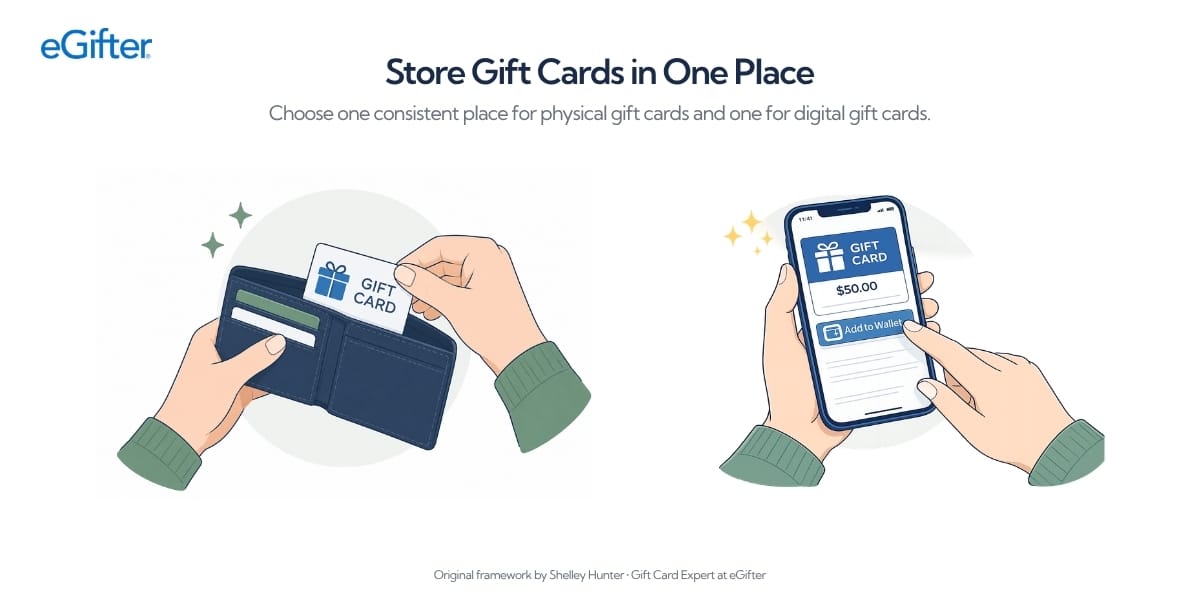
1. Store Every Gift Card in One Consistent Place
The easiest way to lose a gift card is to put it somewhere “safe” and then forget where that was.
Instead, decide where every gift card belongs the moment you receive it.
For physical gift cards, that place is my wallet. I keep gift cards next to my debit and credit cards so I see them every time I open my wallet. More importantly, I always have them with me when I’m ready to make a purchase.
For digital gift cards, create a system, too. If you receive gift cards by email, create a folder called Gift Cards and move every gift card email there as soon as it arrives. If you receive gift cards by text message, star, pin, or otherwise mark the conversation so it’s easy to find later.
I also recommend taking a photo of every physical gift card (front and back) and a screenshot of every digital gift card you receive. Store those images in a Gift Cards folder on your phone. That way, even if you accidentally delete the original email or text message, you’ll still have a copy of the gift card information.
There are so many different ways to receive gift cards today—by email, text message, apps, rewards programs, online accounts, and even your mobile wallet—that it’s easy to lose track of them.
The key is to give every gift card a designated place. Whether that’s your wallet, an email folder, a folder on your phone, or a mobile wallet, having a consistent “home” means you’ll always know where to look.
2. Make a Plan to Use Each Gift Card
One of the biggest mistakes people make is saving gift cards for “a rainy day.”
But the longer you hold onto a gift card, the more likely you are to lose it, forget to use it, or have something happen to the business that issued it. Store closures and bankruptcies aren’t common, but they do happen.
So don’t wait. As soon as you receive a gift card, make a plan for how and when you’ll use it.
For Merchant Gift Cards
As soon as you receive a merchant gift card, think about when you’re most likely to use it.
If someone gives you an Amazon gift card, make a mental note that you’ll use it for an upcoming purchase you were planning to make anyway—new socks, bug spray, a book, or even a blow dryer. Better yet, redeem the gift card to your Amazon account immediately. It will be waiting for you the next time you shop, and Amazon does a great job of reminding you to apply your gift card balance during checkout.
The same idea works for stores you visit in person. If someone gives you an Ulta gift card, decide that you’ll use it the next time you need shampoo, makeup, or skincare products. You can even put a note on your shopping list that says, “Use Ulta gift card,” so you see it when you’re ready to spend.
If you have several merchant gift cards, consider keeping a gift card list on your phone or in a notes app. Sometimes just seeing “Ulta – $50,” “Home Depot – $25,” or “Target – $20” is enough to remind you that you already have money waiting to be spent before you reach for your credit card.
For Restaurant Gift Cards
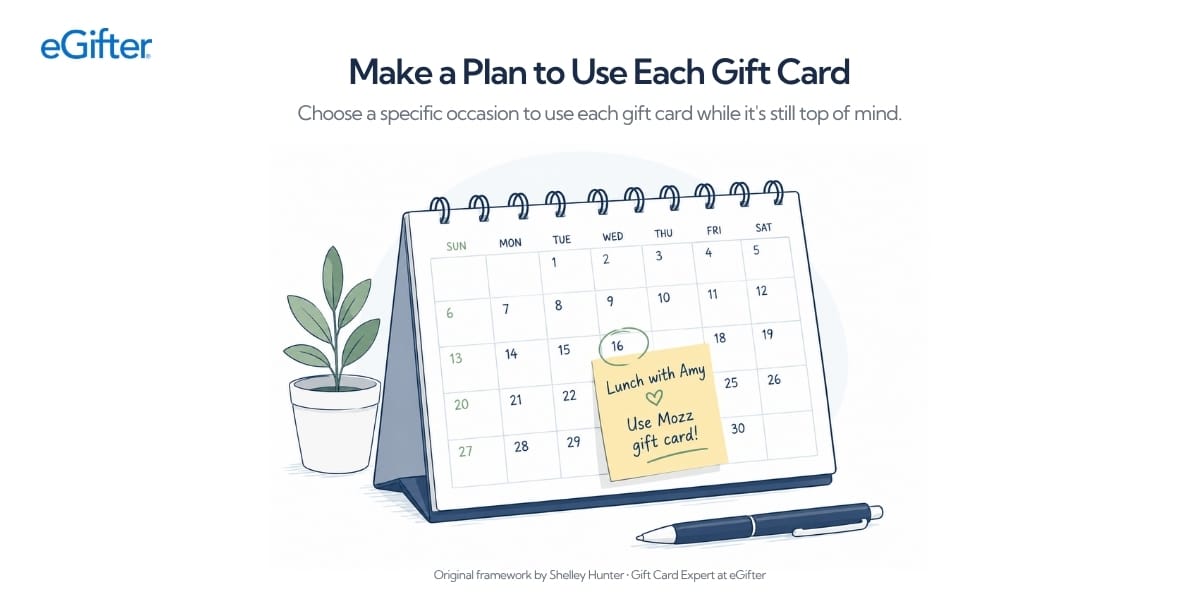
If you receive a restaurant gift card, put a reminder on your calendar before your next lunch or dinner out—especially if you don’t already have a specific occasion in mind.
For example, if I’m planning lunch with my friend Amy, I’ll add a note to my calendar that says, “Lunch with Amy – Use MOZZ gift card.”
A simple reminder like that is often all it takes to remember to use the gift card—or, if it’s still sitting on your desk, grab it before you head out the door.
For Visa Gift Cards and Mastercard Gift Cards
If you receive a Visa gift card or Mastercard gift card, put it in your wallet or mobile wallet and use it for everyday purchases until the balance is gone.
Years ago, this wasn’t always easy. Some point-of-sale systems didn’t handle prepaid gift cards very well, and many cashiers needed to know the exact remaining balance before keying in the card. That’s not the case anymore.
I recently had a prepaid rebate card that I kept in my wallet. Every time I made a purchase, I’d simply tell the cashier, “I’d like to use this Visa gift card first. I don’t know how much is left on it.” The register automatically applied the card balance and sometimes the receipt showed the leftover amount.
I kept using the card that way until the balance reached exactly zero.
It’s an easy way to make sure you get every dollar from the gift card instead of letting it sit in a drawer until you forget about it.
And don’t forget, with Visa and other bank-issued gift cards, you could actually lose money from the gift card even if you know exactly where it’s sitting in your wallet.
Unlike most merchant gift cards, bank-issued prepaid gift cards—including certain promotional and rebate cards—may have expiration dates or begin charging inactivity or maintenance fees after a period of non-use, depending on the card’s terms and applicable law.
That’s another reason I recommend using these cards sooner rather than later. Put the card in your wallet or mobile wallet and use it for everyday purchases until the balance is gone. You’ll get the full value of the gift card, avoid potential fees, and eliminate one more thing you have to keep track of.
3. Be Flexible and Use Every Dollar
Sometimes the easiest way to use a gift card is simply to change your routine.
Shop Where You Already Have Money
Many products are available at more than one retailer. If you have a Lowe’s gift card, consider buying your next light bulbs, paint brushes, lumber, or garden supplies there instead of your usual hardware store.
The same is true for clothing and sporting goods. If you’re shopping for a new pair of Nike shoes, you might find the same pair at Dick’s Sporting Goods, Macy’s, Nike, or Academy Sports. If you already have a gift card to one of those stores, let that help decide where you shop.
You don’t have to buy something you don’t need just because you have a gift card. But if you were planning to make the purchase anyway, it often makes sense to shop where you already have money waiting for you.
Use Every Last Dollar
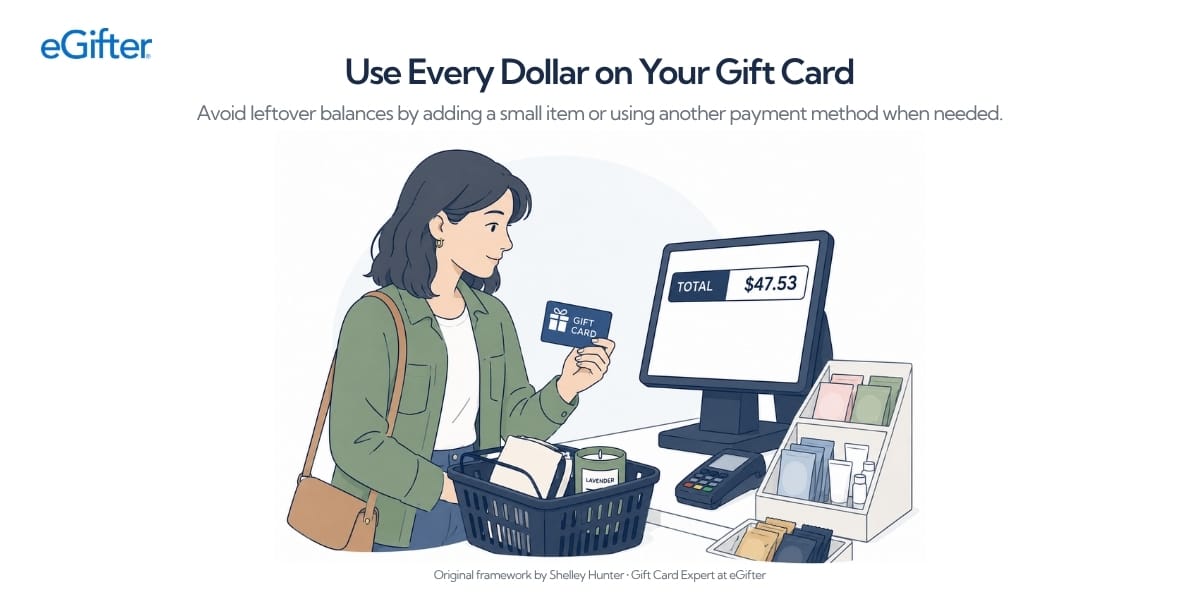
When you’re using a merchant gift card, try to use the entire balance before you leave the store.
For example, if your purchase comes to $48.93 on a $50 gift card, consider adding a pack of gum or bottle of water to bring the total just over $50. The gift card will cover as much of the purchase as it can, and you can pay the small remaining balance with another payment method.
The reason is simple: there’s a good chance you won’t be back in that store again for weeks or months. That’s a long time to hold onto a gift card with just $1.07 left on it, which is why many people eventually throw those cards away.
But $1.07 is still your money. If the gift card was a present from Grandma, it’s part of the gift she gave you. If you earned it through a rebate, promotion, or rewards program, it’s part of the value you worked for. Spending one extra minute at checkout to use every last dollar is almost always worth it—and one of the simplest ways to make sure you don’t accidentally lose part of your gift card.

Frequently Asked Questions About Lost Gift Cards
Can a lost gift card be replaced?
Sometimes. It depends on the type of gift card and whether you can prove ownership.
Many retailers can replace a lost gift card if the remaining balance hasn’t been redeemed, they can identify the gift card, and you can prove it’s yours with the original receipt, gift card number, purchase confirmation, or other identifying information. If you don’t have any of that information, replacing the card may be difficult—or even impossible.
The sooner you contact the retailer after realizing the card is missing, the better your chances of recovering any remaining balance.
Can someone use my gift card if they find it?
Yes. Most gift cards work like cash. If someone finds your gift card and uses it before you recover it, getting the value back can be difficult.
Over the years, I’ve also spoken with people who thought they had simply misplaced a gift card, only to discover it had already been redeemed. In some cases, they forgot they had already used it or a family member had used the card without realizing it wasn’t theirs. In others, the gift card had likely been stolen.
That’s one of the reasons I recommend keeping your receipt, taking a photo of your gift card, or saving the gift card number whenever possible.
Why is it harder to replace a gift card than a credit card?
When you report a lost credit or debit card, your bank already knows who you are, what account you own, and which card was issued to you. They can cancel the old card and send you a replacement.
Most gift cards don’t work that way. They’re typically not linked to your identity, so the retailer first has to identify the gift card and verify that it belongs to you. Without the gift card number, receipt, purchase confirmation, or other identifying information, recovering a lost gift card can be much more difficult.
Do gift cards expire?
It depends on the type of gift card.
In the United States, most merchant gift cards don’t expire for at least five years under federal law. However, promotional gift cards, rebate cards, and some bank-issued prepaid Visa or Mastercard gift cards may have different terms, including expiration dates or inactivity fees. Always read the terms and conditions that came with your gift card so you know exactly how it works.
Can I check the balance on a lost gift card?
Usually—but only if you can identify the gift card.
Many retailers let you check gift card balances online, by phone, or in-store, but you’ll typically need the gift card number and, in some cases, the PIN. If you’ve saved a photo of the gift card, the purchase receipt, or the original email containing a digital gift card, you may still be able to check whether any balance remains.
Worth the Effort to Look for Lost Gift Cards
Losing a gift card can be frustrating, but it doesn’t always mean the money is gone. Whether you’ve misplaced a physical gift card or can’t find a digital one, taking a few minutes to retrace your steps, gather the information you have, and contact the retailer when appropriate may be enough to recover the remaining balance.
Even better, a few simple habits can help keep it from happening again. Give every gift card a designated home, make a plan to use it soon after you receive it, and don’t leave the store with just a few dollars left on the card if you can help it. Those small habits can save you time, frustration, and lost money.
After helping customers with gift cards for many years, I’ve learned that most lost gift cards aren’t truly lost forever—they’re sitting in a desk drawer, buried in an email inbox, tucked inside a wallet, or forgotten in a phone app. A little organization goes a long way.
Whether the gift card was a thoughtful gift from someone you care about or a reward you earned, treat it like the money it represents. You’ll be much more likely to enjoy every dollar—and far less likely to wonder where it went.
Buying gift cards for your business?
If you’re looking for an easy way to send gift cards to employees or customers at scale—and want a system that keeps every card trackable so nothing gets misplaced along the way—eGifter Rewards lets you send bulk gift cards in just a few clicks. And if you want your own brand to be the gift card people trust enough to hold onto, eGifter Merchants can help you launch a branded gift card program of your own.
Here’s to keeping every gift card you receive right where you can find it—and spending every last dollar of it.
— Shelley Hunter, Gift Card Expert at eGifter