
The Short Version
The best gift card isn’t the most flexible or the most expensive—it’s the one that matches how well you know the recipient. The Gift Card Flexibility Scale walks through five options: a Favorite-Brand Card (their favorite local sub shop), a Category Card (a Darden card for the dinner crowd), a Big-Box Card (a Target for the friend you don’t know well—or who LOVES the big red circle), a Choice Card when you want them to pick, or an Open-Loop Prepaid Card (Vanilla® Visa®, Vanilla® Mastercard®, or American Express®) for maximum flexibility. After you pick the type, make sure they can actually use it, load enough to cover the experience, decide between physical or digital delivery, then personalize it with a real note. That’s the formula.
Jump Ahead!
Click a section to jump to what you need.
Why This Gift Card Guide Exists
I’ve been writing about gift cards for well over a decade. In that time, I’ve watched the category grow from a modern replacement for paper gift certificates into one of the most popular ways Americans give. I’ve also watched a lot of gift cards go to waste—not because gift cards are a bad gift, but because it’s easy to give one without thinking of the outcome.
The data backs that up. According to Bankrate, 43% of Americans have at least one unused gift card sitting around, and the average person is holding $244 in unused balance—up from $187 just a year earlier. More than a third of Americans have lost money to a gift card misstep: letting one expire, losing it, or having the store go out of business before they got around to using it.
That’s a lot of well-intentioned generosity that never reached its destination.
This guide is meant to fix that. It’s everything I’ve learned about choosing a gift card the recipient will actually use—and use well. The framework is five steps. Some you can run through in five minutes. Some take more thought. All of them are the difference between a gift card that disappears into a drawer and one the recipient genuinely loves.
Step 1: Match the Card to How Well You Know The Recipient
The single most important question to ask before buying a gift card: how well do I actually know this person?
The answer dictates everything else. The more specifically you know someone—their habits, their favorites, the place they go every Tuesday—the more you can choose a specific gift card that matches an expected experience. For example, if your book-loving friend has a birthday coming up, a Barnes & Noble or Kindle gift card is an easy win. But either would be a stretch for someone who may or may not read. The less you know about a person’s daily life, the more flexibility I suggest.
I think about it as The Gift Card Flexibility Scale, with five levels.
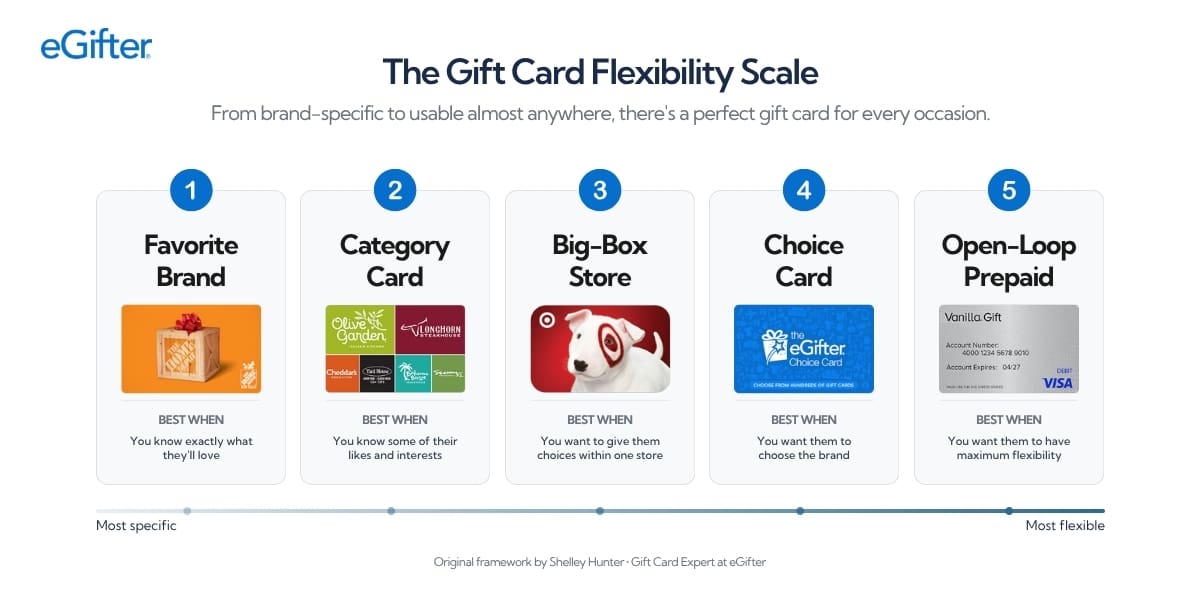
The Favorite-Brand Gift Card (Level 1)
This is the gift card that tells the recipient: I see you. I know what you love.
It’s the local donut shop where they go every Friday. The independent bookstore they spent two hours in last time you visited. The closed-loop card from a specialty store you’d never have picked for anyone else—but you know this person buys all their swimsuits there. It’s even the big-box store they favor over smaller boutiques, or the trendy online shop they’re buying all their shoes from.
Favorite-Brand cards are often hyper-local, niche, or specialty. They’re not always available on big gifting platforms—you might have to buy directly from the store. That extra step is part of what makes the gift land.
I just bought my son a Melin gift card for his birthday and he spent it before the birthday candles were lit. That’s a hit. My daughter is happy with either Ulta or Sephora. She’d use either one quickly. My other son is harder to pick for because his style is so trendy. So I either have to pay really close attention or get a really flexible gift card.
My friend’s mom had other ideas about her own son’s wardrobe. She wanted him to “start dressing nicer.” So for birthdays and other holidays, she gave him gift cards to Nordstrom to kickstart the process. But he didn’t want to change his style. So the gift cards never got used.
A gift card you think someone should use isn’t the same as the one they’ll actually use. (If you ever catch yourself buying someone a gift card to change their behavior—pause and reconsider.)
When you’re confident in the likes, interests, and style of the recipient, this is my first choice. When you’re not sure, opt for more flexibility. Which is why The Category Card exists.
The Category Gift Card (Level 2)
You know enough to know what your recipient likes. You just don’t want to commit them to one specific brand.
A Category Card is brand-name, but with breadth:
- You know they love steakhouse nights out—a Darden Restaurants card covers Olive Garden, LongHorn, Capital Grille, and more.
- You know they’re a movie person, but not which theater chain—Fandango works at most major theaters.
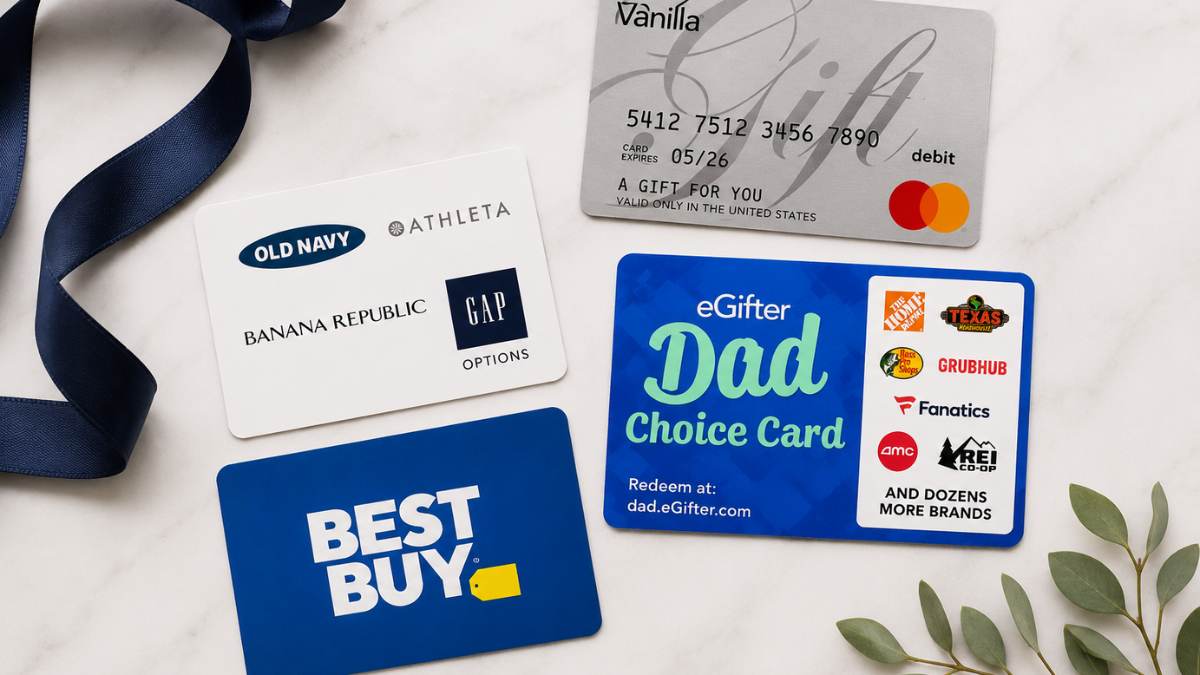
- You know they’re a clothes shopper, but not whether they’re a Banana Republic person or an Athleta person—a Gap Options card works across Gap, Banana Republic, Athleta, and Old Navy.
- You know they travel often, but not whether they’re a Marriott loyalist or a Hyatt loyalist—an Expedia gift card covers hotels and flights without picking a side.
My son-in-law loves to golf but I have no idea where he golfs most often. (I think his favorite course is whichever one is cheapest that week.) So instead of betting on a specific club, I’d get him a Go Play Golf gift card—it works at 5,000+ courses nationwide, so I’m confident he’ll find one nearby. And just to be safe, I can check the locations on their site—or, bonus, the card can be converted to a Topgolf gift card too.
The principle: pick a card that’s in their category without pinning them to a brand they might have outgrown. This is the sweet spot for friends, coworkers, and family members you see often but aren’t living-in-each-other’s-pockets close with.
The Big-Box Gift Card (Level 3)
You don’t know your recipient’s exact tastes—but you know the stage of life they’re in.
A new parent? Target gift card. A college kid? Amazon. A new homeowner? Lowe’s gift card or The Home Depot. A friend recovering from surgery? Walmart gift card, where they can stock up on basically anything.
Big-Box Cards are the everyman of the gift card world—the right call when the category of need matters more than the specific store. It’s also the right level for the coworker, the teacher, or the service provider: someone you don’t know intimately, but who you know shops where everyone shops.
I’ve given several teachers Target gift cards over the years—they can buy what they want or need, and many of them are footing the bill for their own classroom supplies anyway. And an Amazon gift card is one of my go-to wedding gifts—the couple can get anything from new towels to a board game to lightbulbs to clothes for the honeymoon. With a little play on words (“Hope you have an AMAZon Adventure!”) it’s both practical and fitting.
The Choice Card (Level 4)
The eGifter Choice Card is one of the best inventions in the gift card world, and I say that as someone who’s been in this industry since early days.
A Choice Card is a multi-brand card. The recipient gets one card, then “redeems” it by choosing which gift card (or gift cards) they want in exchange—Sephora or Ulta, The Home Depot or Lowe’s, Regal or AMC, Athleta or Lululemon, with literally hundreds of brands to choose from.
Some Choice Cards even have themes built around the occasion or recipient: the eGifter Choice Dad Card, eGifter Choice Streaming Card, eGifter Choice Kids Card, eGifter Choice Teacher Card, or eGifter Choice Takeout Card. That theming turns a flexible card into a curated one—the recipient still picks, but you’ve already narrowed the options to something that fits the moment.
A Choice Card is the right level when:
- You want a theme that fits the moment—a Dad Card for Father’s Day, a Mom Card for mom’s birthday, a Teacher Card for back-to-school or teacher appreciation.
- You think they play Xbox, but it might be PlayStation or Nintendo (or any version of “I’m 80% sure, but I don’t want to be wrong”).
- You don’t know the recipient well enough to make a more specific call, or you want something that looks more personalized than cash.
A Choice Card is almost as flexible as a Visa, but it feels more like a real gift. The recipient is still getting a brand-name experience—they’re just the one choosing the brand.
Quick Note: Since this card requires an extra step—logging into the Choice Card system to redeem it for a digital gift card or cards—either give it to someone comfortable navigating a website, or plan to walk them through the redemption yourself. Unlike most of the other cards on this spectrum, a Choice Card can’t be taken straight to a store. It has to be “swapped” first. Here’s the full selection of eGifter Choice Cards.
The Open-Loop Prepaid Card (Level 5)
The final level on the Gift Card Flexibility Scale is the open-loop prepaid card: a Vanilla® Visa® eGift Card, Vanilla® Mastercard® eGift Card, or American Express® eGift Card that can be used virtually anywhere a credit card is accepted.
Open-Loop Prepaid Cards are the only gift cards on this scale that can cover nearly anything—including expenses other gift cards can’t touch. Bills. Services. A doctor’s copay. A haircut at a local barber. Parking. The toll road they didn’t budget for. That’s real flexibility.
But you do pay for it.
Open-Loop Prepaid Cards usually come with:
- A purchase fee, typically $3–$6, depending on the amount loaded to the card. This is the cost of running the gift through the credit card network rather than a single retailer.
- Often an inactivity fee after 12 months of no use. The small fee (usually $3–$5 per month) can slowly drain a card’s balance if it sits untouched. Federal law protects the funds from expiring for at least 5 years, but it doesn’t protect the recipient from these fees.
- Restrictions. Prepaid cards generally must be used within the United States and can’t be used for peer-to-peer payments (Venmo, PayPal, Zelle). The card itself may also be blocked from certain categories—subscription services, gaming, gambling sites, and adult content.
An Open-Loop Prepaid Card is the right pick when:
- You don’t know the recipient all that well.
- You want the gift to cover anything—bills, groceries, a vet visit, and beyond.
- You want the recipient to feel zero pressure about where to spend it.
- You’re shopping for someone whose tastes you genuinely can’t predict.
- You know the recipient will appreciate the flexibility.
- You don’t mind paying a small fee for maximum flexibility.
The trade-off: Open-Loop Prepaid Cards can feel less “gifty.” A Visa is functionally close to cash, which means it doesn’t carry the same emotional weight as a card that says “I picked this for you.” Which is fine—sometimes that’s exactly what you want.
When I do give an Open-Loop Prepaid Card, I lean into the personalization. At eGifter, you can add a photo, a custom message, or even use the AI Image generator to create a funny meme or an Easter egg from a shared memory. The card is so easy to use that the extra personalization is all you need to go from “functional” to thoughtful.
How to use a VIRTUAL Prepaid Gift Card
The easiest thing to do is add a virtual prepaid gift card to a digital wallet (Apple Pay or Google Pay). That makes the card work like any debit card—tap to pay in-store, with the cashier covering any difference on a second payment method.
For online checkout, know that most shopping carts won’t let you split a single transaction across two payment methods. So either get the cart under the balance, or use the card to buy a closed-loop store gift card first, then split-tender at checkout with another card.
Quick Reference: The Gift Card Flexibility Scale
| Level | Name | When to use it |
|---|---|---|
| 1 | The Favorite-Brand Card | You know them really well—a single brand or store they love |
| 2 | The Category Card | You know their interests but not their specific loyalty—one card covering multiple brands in a category (Darden for steakhouses, Fandango for theaters) |
| 3 | The Big-Box Card | You know an area of need, or you want the recipient to have broad options—a one-stop shop like Target, Walmart, or Amazon. |
| 4 | The Choice Card | You want them to pick the brand—one card the recipient swaps for any of hundreds of brand options including single-brand, big-box, and even Visa or Mastercard. |
| 5 | The Open-Loop Prepaid Card | You want maximum flexibility, accept a small fee |
The lower the level on the scale, the more clearly the card experience is defined—usually one brand, whether a single shop or a chain. The higher the level, the more freedom the recipient has—a Choice Card unlocks many brands; an Open-Loop Prepaid Card unlocks almost any purchase, anywhere.

Step 2: Give Enough Value to Create a Full Experience
Most advice on “how much to spend on a gift card” starts with a dollar amount: $25 for a friend. $50 for a coworker. $100 for family. I think that’s backwards.
Here’s the better question: what’s the recipient actually going to spend this on, and is the amount I put on the card enough to cover that experience?
A few examples:
- $10 at Starbucks gets one or two drinks. It’s a sweet gift for a coworker.
- $25 at Chick-fil-A is a meal for one or two people. Perfect for a small thank-you.
- $50 at Ulta lets the recipient pick one or two products they’ll enjoy.
- $50 at a sit-down restaurant might cover one entree and a drink. Not dinner for two.
- $100 at the movies could cover tickets, popcorn, and drinks for two or maybe more.
The principle: think about the purchase you’re funding, not a dollar benchmark based on the intimacy of your relationship. I love my kids to the moon and back, but I don’t have the budget for an amount equivalent to how I feel. Sometimes “Dinner’s on Mom” is the right gift.
Instead, choose an amount that matches how the gift is likely to be used. If you want the recipient to have one solo smoothie experience, load enough for one smoothie. If you want them to have a weekly treat for a month, multiply. If they’re likely to bring their kids or a companion to the movies, bump the amount to potentially cover more than one person.
Sometimes the reverse is true: you have a budget, and you need to figure out what gift card best fits it. Same logic in reverse—what can $X buy that the recipient will actually enjoy? $20 isn’t a great clothing store gift, but it’s a great ice cream gift. Match the card to the budget, not the other way around.
What to avoid: making the recipient pull out their own wallet to make your gift work. I once received a $20 Build-A-Bear gift card from a well-meaning friend. As a mom of three kids, the math didn’t work. I couldn’t take one child (let alone the entire family) to Build-A-Bear without having to spend far more than the gift card. She meant well, but the gift card felt more like a discount than a present.
The rule: Give enough to fund the experience—not just contribute toward it.

Step 3: Make Sure They Can Conveniently Use the Gift Card
Thanks to online shopping, many gift cards can be used online even if the recipient doesn’t live near a physical location. But that’s not always true, and some gifts are meant to be enjoyed in person. Since convenience still plays a big role in whether a gift card actually gets used, this is an important consideration.
The question: can the recipient actually use this card where they live, shop, eat, play, or travel?
Some obvious mistakes I’ve seen:
- An AMC card given to someone who only has a Cinemark nearby
- A regional gas station for someone who doesn’t live in the region
- A restaurant gift card that requires a 45-minute drive
- An Xbox gift card for someone who only plays on PlayStation
- A Hulu gift card for someone who already pays for Netflix
- A DoorDash gift card for someone who only uses Uber Eats
- A Costco gift card without a Costco membership (yes, they can get a temporary Shop Card, but it’s still less convenient.)
If you’re not sure, it usually takes less than a minute to find out. A five-second Google search (“Texas Roadhouse near [recipient’s town]”) can tell you if there’s a convenient location nearby. A quick visit to the brand’s website can confirm whether the gift card can be redeemed online.
Convenience also means making sure the gift card fits the recipient’s everyday habits. A quick text to a friend, sibling, or parent can answer questions like, “Does she play Xbox or PlayStation?” or “Does she use DoorDash or Uber Eats?”
Finally, think about lifestyle fit. A steakhouse card for a vegan. A high-end clothing card for someone who only wears thrifted. A dessert shop for someone trying to lose weight. These aren’t just awkward—they’re unlikely to be appreciated. If you know the recipient has a meaningful restriction or preference, work around it. If you’re not sure, ask someone who knows them or choose a more flexible option.
One more tip! One of my favorite eGifter features is Gift Card Swap. If the recipient hasn’t accessed the original gift card code, they can swap many branded gift cards for a different brand. It’s a nice way to make sure the gift fits the recipient—not just your best guess.

Step 4: Decide How—and When—to Deliver It
Plastic gift cards replaced paper gift certificates many moons ago. And for a long time, the industry assumed digital would eventually replace plastic the same way. It hasn’t—at least not yet. According to Mordor Intelligence, physical gift cards still hold roughly 57% of the market, while digital is growing faster (a 13% projected annual growth rate through 2031). Both formats are gaining; neither is going away.
There are good reasons to give either format. And with eGifter, there’s a hybrid option too: print-at-home, which lets you order a card digitally, then print and fold it into a greeting card to hand over in person.
When you’re picking a format, the right question isn’t “digital or physical?”—it’s “what’s the full gifting experience I want to create?” Do you want to hand something to someone at a party with a bow on top? Or would you rather send a thoughtfully timed digital card with a video tucked inside? I’ve done both, plenty of times. I love handing a gift to someone with a bow and a pairing (see the personalization section below). But sometimes digital is the best or only option.
Especially as more DTC brands (Melin, &Collar, Threadless, thredUP, Allbirds, and many more) skip the in-store experience entirely—digital is often the only way to give their gift cards at all. You might find one on an end cap at the grocery store, but it’s the exception.
The point is that both formats have their place. And the right one depends as much on the recipient as on the gift. Will Grandma be able to manage an eGift card on her phone? Probably not as easily as she’ll handle a plastic card she’s seen a hundred times before. But your teenager who doesn’t carry a wallet anymore? They’re going to love the tap-to-pay experience that comes from saving a digital card to their phone.
So at eGifter, you have two delivery options—digital and print-at-home—plus the always-available choice of buying a physical card directly from the brand.
Here’s how each one works.
Physical Gift Cards
On the consumer side, eGifter is digital-first—we offer digital gift cards and print-at-home, but not physical cards from our consumer site. If you want a physical gift card for personal gifting, buy directly from the brand—either their website or one of their retail locations. (For more on where to buy, I’ll be writing a full guide on the best places to buy gift cards.)
Note: eGifter does support physical gift cards through our business programs—eGifter Rewards for bulk gifting, and eGifter Merchants for retailers running their own gift card programs. But for our consumer platform, digital is our focus.
Physical gift cards are the right choice when:
- You’ll see the recipient in person and want the tactile moment of handing a gift to them—with a card, a bow, or a companion item.
- The recipient is less digitally comfortable so a plastic card will be easier to use.
- You’re including the gift card as part of a larger physical gift package.
One significant risk: mailing physical gift cards has gotten genuinely risky. Mail fraud is real, gift cards get stolen from mailboxes, and once a physical card is gone, it’s effectively cash. If you do need to mail one, insure it and use tracking.
Digital Gift Cards
Digital cards are eGifter’s specialty—and the right choice for many modern gifting situations. They can be personalized, scheduled for delivery at a specific date/time, and recovered easily if something goes wrong.
Digital gift cards work best when:
- You can’t be there in person, or you don’t want to keep track of a physical gift card.
- You don’t want to pay for shipping or worry about something getting lost in the mail.
- You want the card to arrive at a specific time—the morning of the birthday, the day the baby comes home, the night before someone’s first day at a new job.
- You want to include a photo, video, or AI-generated image as part of the delivery.
- You want to give privately, before or after a public celebration.
- You’re giving to a recipient who organizes life from their phone—a teen, a young adult, anyone who’d rather tap to pay than carry plastic.
Digital gift cards are also more secure than physical. They don’t get lost in the mail. The recipient doesn’t have to remember to bring them anywhere. And eGifter lets you resend the digital card if the recipient can’t find the original email.
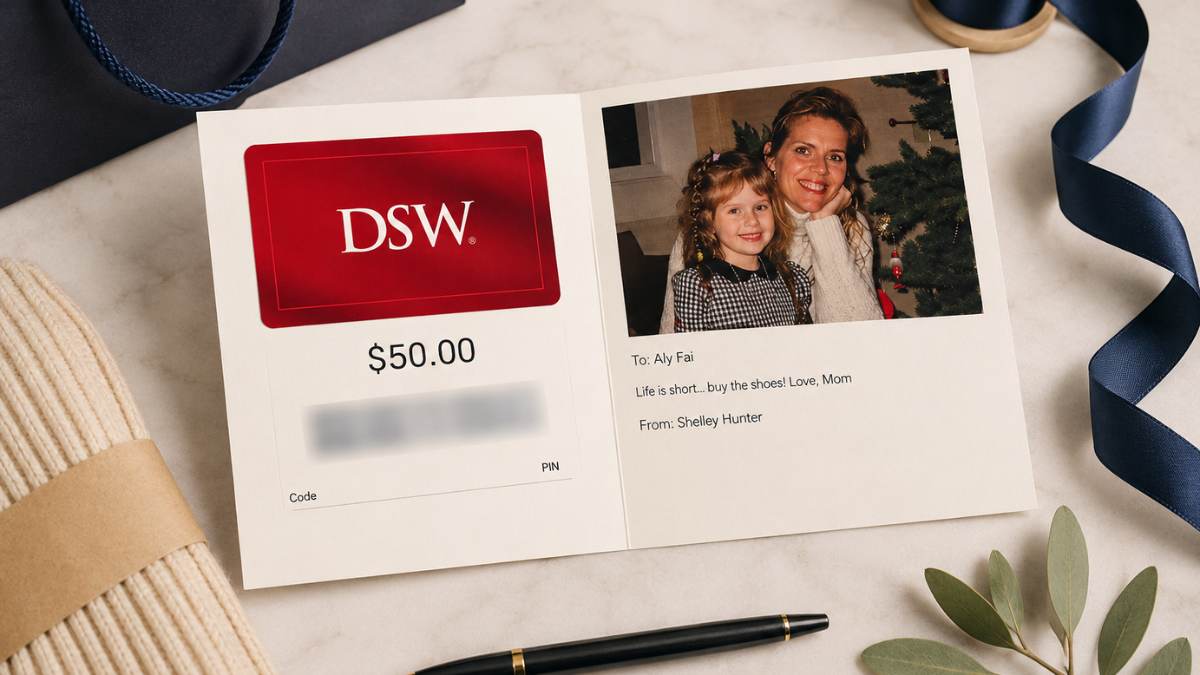
Print-at-Home
Print-at-home is eGifter’s hybrid option. You buy the gift card digitally, receive it via email, print it, fold it up, and deliver it in person. But this isn’t the bare-bones print-at-home other platforms offer—where you get a page with the card image, a barcode, and a card number to hand over. Ours is designed as a full greeting card with the gift card built in.
When to use print-at-home:
- You want instant, free delivery, but also want something to present at the party.
- You bought a gift card last minute and don’t have time to wait for shipping.
- The gift card is only available digitally—but you want to give it in person.
- You like to get crafty—adding stickers, washi tape, or a handwritten envelope.
Why Timing Matters
One of the underrated advantages of digital gift cards is the ability to schedule delivery for a specific date and time—not just “send it whenever.”
When I bought my son’s birthday gift card from a small direct-to-consumer brand, I could only schedule for a date, not a time. So I had no idea whether it would land at midnight or 4 p.m. I wanted him to wake up to it—not have it arrive so late that he’d wonder if I’d forgotten.
That’s exactly why eGifter lets you pick both the date and the time. Time-of-day is the gift card detail that lets you be there at the right moment, even when you can’t be in the room.

Step 5: Personalize It—The Note Matters as Much as the Card
I got into the gift card industry because I love the freedom and flexibility gift cards offer. No more standing in the return line to take back the shoes my mom bought me, or asking my mother-in-law for a receipt so I could exchange nearly all of the kids’ gifts for sizes that fit better. (Love her, but she just guessed sizes all…the…time.)
But, like so many other people, I recognized that giving a gift card can sometimes feel a little less “thoughtful” than a traditional present. In my opinion, it’s not the thoughtfulness that’s missing, though. It’s the reveal—the oh, what’s in here?!? excitement.
My goal since day one has been to show that there are other ways to put personality and connection into a gift card.
Here’s what I mean.
A $25 Starbucks gift card, handed over with nothing else, is fine. A $25 Starbucks card with a note that says “You got me through the worst quarter of my career. Thank you.” is a completely different gift. Same card. Different gift entirely.
The note is the part the recipient remembers. The card is the part they redeem.
At eGifter, here are some easy ways to personalize digital gift cards:
Add a real note. Not just “thinking of you” or “happy birthday.” Something specific. “For the long drive to your sister’s next month.” “One less meal to cook this week.” “For the next time you need to escape.” Specificity is what makes a note feel personal.
Add a photo, video, or AI-generated image. Whether from your mobile device or a desktop, you can attach a photo, a video, or a generated image to the delivery. A short video from the grandkids saying “Happy birthday, Grandpa” turns a $50 card into a repeatable (rewatchable) moment.
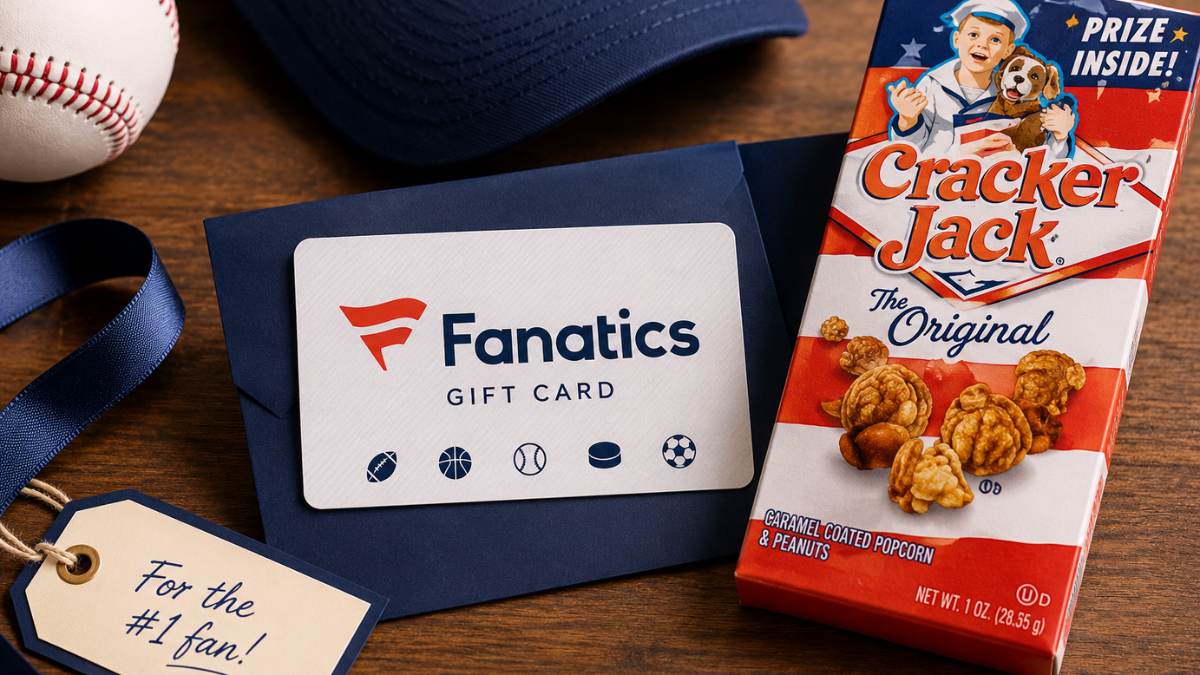
If you opt for a physical gift card, then a real note also does the trick. If you have a few extra dollars or minutes to spare, pair the gift card with a small physical item to go with it.
Here are some of my favorite examples:
- A Dave & Buster’s gift card for a family, with a set of matching socks to wear for the games—bowling, arcade, whatever they’re up for.
- A Barnes & Noble gift card for an avid reader, with a list of three books you personally recommend and a homemade bookmark from the grandkids.
- A Texas Roadhouse gift card for new parents, with a “free babysitting” coupon.
- A Fanatics gift card with a ballpark snack pack—sunflower seeds, Cracker Jack, and peanuts.
The tie can also be personal rather than thematic. A candy bar you know they love taped to the front of an envelope. A favorite lip gloss tucked in with a Sephora gift card. The companion item doesn’t have to be expensive. It just makes the gift card feel curated or hyper-personal.
The second-card move. Two gift cards together can create a paired experience—but only if both make sense together and both are loaded with enough value to be useful on their own.
Some that work:
- Dinner and a movie (AMC Theaters plus a local restaurant).
- Airport and Uber (a Southwest Airlines card plus Uber).
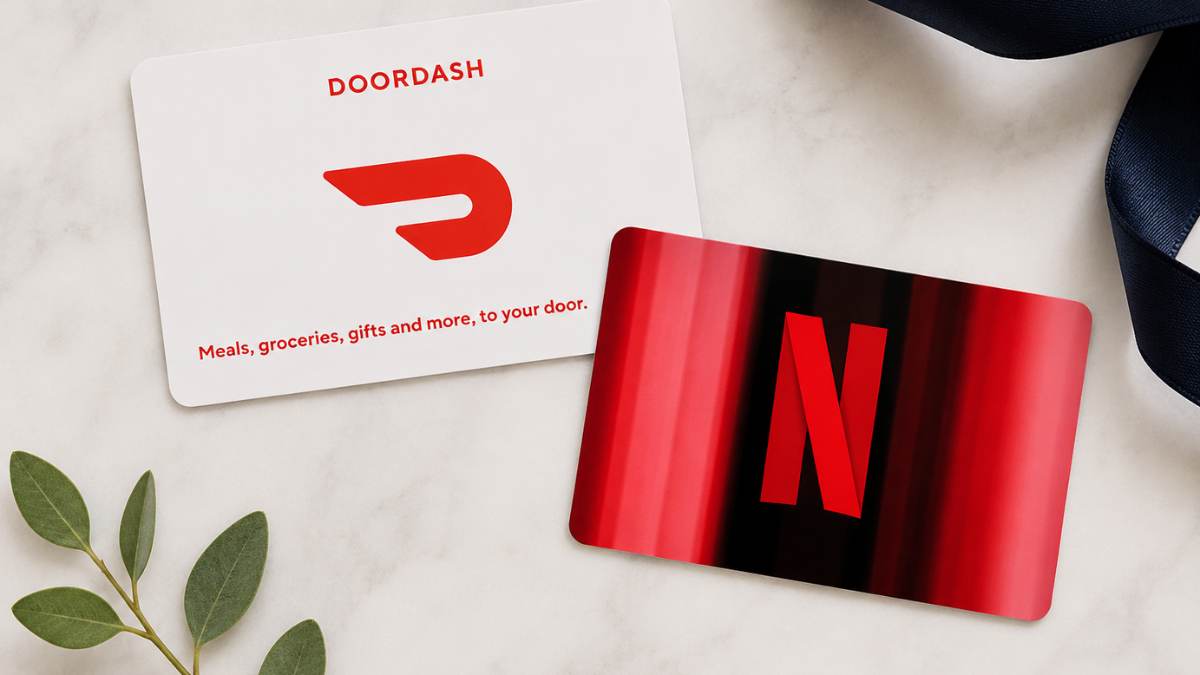
- Date night at home (Netflix plus DoorDash).
- New cookware and a meal kit (HelloFresh plus Target).
The rule: the two cards should create a complete experience together, and each should have enough value to hold its own. It’s not a gift to give someone two underfunded gifts.
Give With a Backup Plan
The five steps above are the framework. The rest of this guide is the practical know-how that surrounds it—starting with one thing every gift-giver should think about before they click buy.
A gift card is like money, so think about what happens if it’s lost, deleted, or never reaches the recipient. In most cases, your ability to resolve the problem comes down to one thing: having a purchase record.
Buy from a trusted seller. Whether that’s the brand’s website, the brand’s store, or a reputable gift card retailer like eGifter, buying from a trusted source gives you a transaction record that can help if something goes wrong.
Keep your receipt. If you buy online, this usually happens automatically because you’ll receive an email confirmation. If you buy in a store, hold onto the printed receipt until you’re sure the gift has been received and redeemed.
Start where you bought it. If there’s a problem, contact the seller first. They have the transaction record and can tell you what options are available. What they can do depends on the brand, the card, and whether it has already been redeemed.
I’ll be writing a full guide on the best places to buy gift cards, and a separate one on what to do if a gift card is lost. For now, this is the giving-side checklist: buy from someone you trust, keep your purchase record, and don’t throw away the receipt too soon.
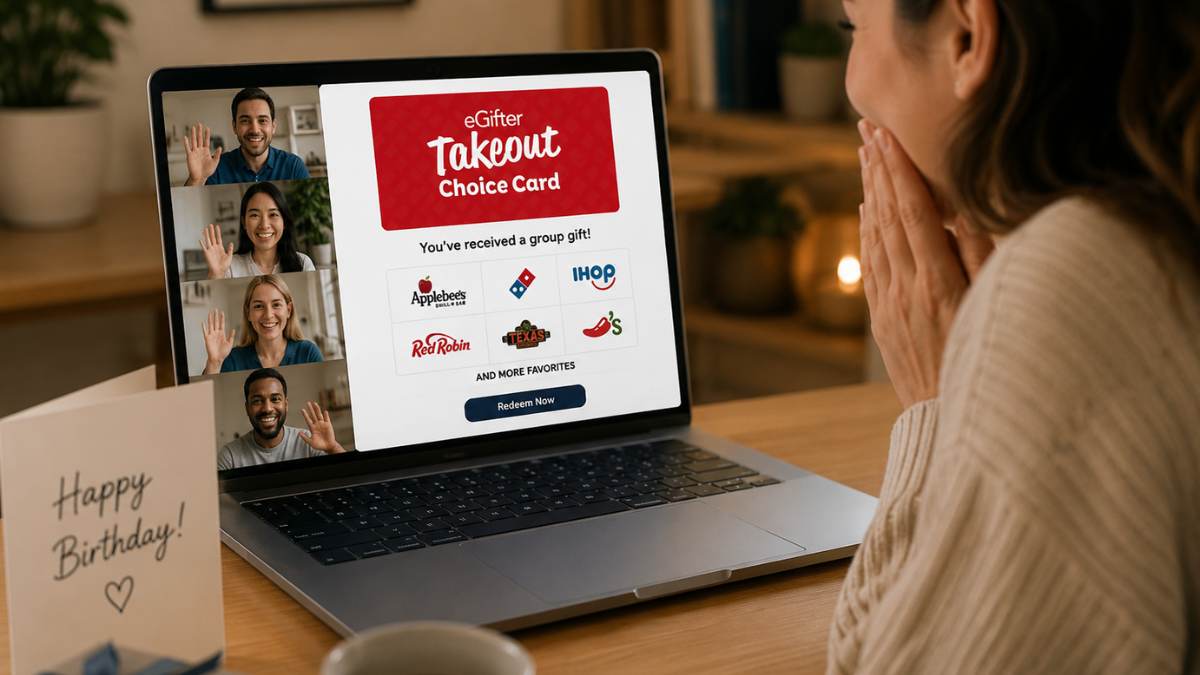
Let’s Talk About Group Gift Cards
Group gifting unlocks something a single contributor often can’t: a substantial big gift.
Think about a baby shower. A $25 gift card from me alone might cover one pack of diapers or a single small item. But $25 contributed toward a group gift—pooled with what everyone else is giving—can go toward the stroller, the convertible car seat, or some other meaningful purchase the new parents really want. Same $25 from me. Very different impact.
That’s the case for group gifting in general: any time the group can give something better together than any one person could give alone. A wedding gift. A graduation gift. A retirement gift. A teacher appreciation gift. A milestone birthday. A coworker’s farewell.
The catch used to be the logistics.
The traditional group gift meant one person fronting the money and chasing everyone else to pay them back. Cash in an envelope at the party. Checks in the mail. A spreadsheet of who said they’d contribute. And then the math: spend $200 expecting people to chip in their share, end up collecting only $187 and covering the difference yourself. Or collect $220 and scramble to buy a baby rattle or a pair of socks to round out the gift. Either way, awkward.
Peer-to-peer payment apps (Venmo, Zelle, and the rest) made the collection part easier, but you still had to organize it—send the request, follow up, count what came in, decide what to actually buy.
A group gift card takes care of everything in a few steps.
Here’s how group gifts work on eGifter:
- You set up the gift. Pick the gift card (or let the recipient choose with a Choice Card), set a target dollar amount, and schedule a delivery date.
- You send a link to everyone in the group. No requests, no chasing. Each person opens the link and contributes whatever they want—anonymously if they prefer, with a personal note attached.
- The personalized card gets delivered automatically. What you collect is what you give. No fronting the money. No spreadsheets. No leftover dollars or scramble shopping.
When to use a group gift card:
- The pooled amount will be meaningfully more than one person’s contribution
- There is a “group” relationship (work team, friend group, extended family)
- You’d rather not be the one collecting Venmo payments and chasing reimbursements.
- You want a convenient way for contributors to chip in—with their own personal note.
All the other rules in this guide still apply to group gifts—match the card to the recipient, load it enough to cover the experience, make sure they can use it where they live. If you’re not exactly sure, go with a gift card from their registry, or default to a Choice Card or Visa.
Frequently Asked Questions
What’s the Best Gift Card to Give?
There’s no single “best” gift card—the right one depends on how well you know the recipient. The Gift Card Flexibility Scale in this guide walks through five options: a Favorite-Brand Card when you know exactly what they love, a Category Card when you know their interests but not their specific loyalty, a Big-Box Card when you know their stage of life, a Choice Card when you want them to pick the brand, and an Open-Loop Prepaid Card (like a Vanilla® Visa® or Vanilla® Mastercard®) when you want maximum flexibility.
How Much Should I Spend on a Gift Card?
Whatever fits your budget comfortably—and load enough to cover the experience you’re funding. The right amount depends on the purchase, not a generic dollar benchmark. $25 at a local donut shop covers a treat for a few mornings. $50 at Chipotle covers a meal for two with leftovers. $100 at Macy’s lets the recipient pick out a new blouse or a home essential. Match the amount to what the recipient will realistically buy, so they can use your gift without spending their own money to top it off.
What’s the Safest Gift Card to Give?
The safest gift cards are bought directly from the brand, from the brand’s website, or from a reputable digital gifting platform like eGifter. Rack displays at retail stores—including grocery stores, gas stations, and convenience stores—have historically been a target for card-tampering schemes, where scammers compromise cards before activation. The good news: retailers and gift card companies have been actively investing in better packaging, activation security, and fraud monitoring to address this.
In general, never buy a gift card from an individual you don’t know—on social media, auction sites, or anywhere offering “discounted” cards. Those may be drained, stolen, or part of a scam.
For the most secure option, digital gift cards add an extra layer of protection because the platform retains a transaction record that can be used to resend a lost card—and it can’t get stolen from the mail.
When Should I Give a Digital, Physical, or Print-at-Home Gift Card?
Each format works best in different situations. Digital gift cards are the most flexible and secure option—you can schedule delivery, attach a photo or video, and resend if the recipient can’t find the original email. Recipients can store them easily and never worry about leaving the card at home. Physical cards are the right call when you’ll see the recipient in person and want the tactile moment of handing the gift over, or when the recipient is less digitally comfortable. Print-at-home is the hybrid: you order digitally, then print and fold the gift card like a greeting card to hand over in person. It’s especially useful when you’ve left gifting until the last minute or want a digital card with a physical handoff.
Do Gift Cards Expire?
Most gift cards can’t expire for at least five years after the date funds were last loaded—that’s federal law under the Credit CARD Act of 2009. But there are two important exceptions:
- Open-Loop Prepaid Cards (Visa, Mastercard, American Express) can charge inactivity fees after 12 months of no use, slowly draining the balance.
- Promotional or rewards cards (the ones given to you as part of a deal, not purchased) sometimes carry shorter expiration windows. Check the fine print.
Safest rule: if you receive a gift card, use it within the first year. The longer it sits, the more likely it’s exposed to one of these edge cases—or simply lost or forgotten.
Are There Fees on Gift Cards?
It depends on the type:
- Closed-loop store cards (Target, Amazon, Sephora) typically have no purchase fee.
- Multi-brand Choice Cards typically have no purchase fee.
- Open-Loop Prepaid Cards (Visa, Mastercard, American Express) usually have a small purchase fee ($3–$6), and may have inactivity fees after a year of no use.
What If I Lose a Gift Card?
Recovering a lost gift card depends on two things: whether you can locate the card itself, and whether the balance is still on it. For digital gift cards bought through a reputable platform like eGifter, the original delivery can usually be resent—the card information is preserved in your purchase history. For physical cards, recovery depends on whether you have the activation receipt or other proof of purchase. Without it, a lost physical card is typically gone.
But even when you can recover the card information, the funds may not still be there. If someone else has already used the card (which can happen if a physical card was stolen, or a digital card’s information was intercepted), there’s nothing left to recover. This is one of the reasons digital is more secure—and why using gift cards soon after receiving them is the best protection against this whole scenario.
What Happens to My Gift Card if a Business Closes?
It depends on how the business closes—and one key concept makes the whole thing easier to understand. A gift card is a liability on the business’s balance sheet, not an asset. The funds you loaded belong to you, but the business owes you the goods or services. When a business closes, the question becomes: who’s responsible for that liability?
If the business is sold and the new owner keeps operating as usual, they typically honor existing gift cards—they want to keep current customers happy.
If the business is sold for its assets only (the brand name, the customer list, the IP—but not the liabilities), the new owner has no obligation to honor existing cards. This is what happened when companies like Bed Bath & Beyond, Coldwater Creek, Radio Shack, and Toys R Us became digital-only successors of their original physical stores. The new ownership bought the brand but not the gift card debt, and existing cards stopped being honored after a transition date.
If the business files for Chapter 11 bankruptcy but stays open, gift cards may continue to be honored—at least initially. The bankruptcy court may eventually set a deadline for redemption (often during the liquidation phase) because the court is trying to sell assets to recover money for the business’s creditors.
If the business goes out of business entirely, gift cards typically can’t be redeemed and the funds are lost.
The best protection is timing. According to Bankrate, 12% of Americans have had a store go out of business before they could use a gift card. Use gift cards as soon as possible, and when buying for someone else, choose brands you’re confident will still be around.
Can Multiple People Contribute to a Gift Card?
Yes—eGifter’s group gift card makes it easy for multiple people to contribute toward a single gift card. Instead of one person covering the full amount, everyone can chip in, add a personal message, and create one thoughtful gift together.
The Shortest Possible Summary
If you remember nothing else from this guide:
- Match the card to how well you know them. The more specifically you know someone, the more specific your card can be.
- Load it with enough to cover the experience. Match the dollar amount to the actual purchase you’re funding.
- Make sure they can use it. Check location and fit before you click buy.
- Deliver it well. Digital is secure and flexible. Physical is great for in-person delivery. Print-at-home offers both.
- Personalize it. A personal note and a photo are the cheapest, highest-impact moves you can make.
A great gift card isn’t the most expensive or the most flexible. It’s the one the recipient looks at and thinks: they really know me and I can’t wait to use this.
Find the Perfect Gift Card at eGifter
Ready to put these ideas into practice? Browse hundreds of gift cards, personalize your gift, and send it in minutes.
Buying gift cards for your business?
If you’re sending recognition gifts to employees, running a customer loyalty program, or rewarding partners and contractors, eGifter Rewards lets you send bulk gift cards in just a few clicks. And if you want your own brand to be the gift card more people choose, eGifter Merchants can help you launch a branded gift card program of your own.
However you give—and whoever you give to—the goal is the same: give a gift card that feels personal, thoughtful, and chosen just for them.
Here’s to picking the perfect gift card every time.
— Shelley Hunter, Gift Card Expert at eGifter